
NCB in car insurance
MOTOR INSURANCE
Premium starts at ₹2072 ^

Premium starts

at ₹2094*
9000+ Cashless  Garagesˇ

9000+ Cashless

Garagesˇ
Over Night Vehicle Repairs¯

Overnight Vehicle

Repairs-
4.4 Customer Ratings ^

4.4

Customer Ratings
Home / Motor Insurance / Car Insurance / Comprehensive Car Insurance
Quick Quote for your Car Insurance

I hereby authorize HDFC ERGO General Insurance to contact me before 10pm. I agree that this consent will override my NDNC registration.

Call Icon
Need Help? Talk to our experts 022-62426242

Comprehensive Car Insurance

Comprehensive Car Insurance

Comprehensive car insurance is a type of motor insurance policy that gives complete protection for your car. It covers damages to your own vehicle due to accidents and natural/man-made disasters. In addition, it also provides coverage for third-party liabilities, which is mandatory as per the law. Simply put, it helps you stay financially protected against most risks your car may face on the road.

What is Comprehensive Car Insurance?

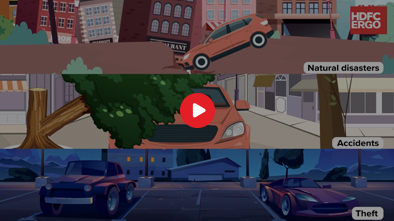
With a comprehensive car insurance plan, if your car suffers any damage, you get financial support equal to the repair amount. The kinds of damage covered differ from plan to plan. A standard comprehensive plan will cover damages due to accidents, theft, fire, natural disasters (earthquakes, landslides, storms, etc.), and more. It will also cover third-party liabilities.

With such wide-ranging coverage, you can enjoy peace of mind every time you hit the road.

Comprehensive insurance also offers a personal accident cover of up to ₹15 lakh~*. This cover provides financial support in case the owner-driver is injured or passes away due to an accident. With HDFC ERGO, you can further customise your policy by choosing helpful add-ons such as Zero Depreciation, EMI Protector Plus, and Return to Invoice, based on your needs.

Read More

What Are the Key Features of Comprehensive Car Insurance?

A comprehensive car insurance policy comes with several features to ensure a smooth, all-around safe journey for you.

Feature What It Means
Dual Coverage Under One Policy Combines third-party liability and own damage in a single policy for broader protection.
Own Damage Cover for Multiple Risks Covers damage due to accidents, theft, fire, natural calamities (floods, storms, quakes) and man-made events (riots, vandalism).
Mandatory Personal Accident Cover Includes PA cover for the owner-driver as per IRDAI rules, offering financial support in case of accidental death or disability.
Optional Add-ons Available Allows selection of useful add-ons like Zero Depreciation, Engine Protection, NCB Protection, Roadside Assistance, and Return to Invoice.
Cashless Repairs at Network Garages Enables cashless servicing at authorised garages, where repair bills are settled directly between the insurer and the garage.
No Claim Bonus Benefit Provides NCB discounts at renewal for claim-free years, reducing future premiums.

How Does Comprehensive Car Insurance Work?

The meaning of comprehensive car insurance lies in its name – it is comprehensive. i.e., it covers both third-party damages and own damages to the vehicle. In the case of damages to your vehicle due to any insured peril under comprehensive insurance for the car, the insurer will bear the repair cost. In the case of a theft, the insurer pays a lump sum benefit covering the financial loss you suffer.

You can even make a cashless claim under comprehensive insurance if you get your car repaired at a networked garage.

Example: The insurer will bear the repair cost if Mr. A's vehicle gets damaged due to a flood.

On the other hand, if any third party is physically injured or killed, or any third-party property is damaged by the insured vehicle, the policyholder can claim expenses for these damages under a comprehensive car insurance policy. The insurer would handle the compensation payable to the third party for the financial loss you have caused under a comprehensive car insurance policy.

Example: If Mr. A's vehicle damages Mr. B's bike in an accident, then Mr. A can claim expenses under comprehensive car insurance for losses incurred to Mr. B’s bike.

What is Covered and Not Covered Under Comprehensive Car Insurance?

Understanding what is covered and what is not under a comprehensive car insurance policy helps you avoid surprises at the time of a claim and choose the right coverage with confidence.

The following pointers explain the various inclusions under the coverage of the HDFC ERGO comprehensive car insurance policy:

Covered in Car insurance policy - Accidents

Accidents

This cover applies if your car is damaged in an accident and helps take care of the repair or replacement costs, as per policy terms.

Covered in Car insurance policy - fire explosion

Fire & Explosion

If your car is damaged due to fire or an explosion, we take care of the finances for the repairs, as per policy wordings.

Covered in Car insurance policy - theft

Theft

In case your car is stolen during the policy period, we will repay you as per the loss incurred, subject to policy terms.

Covered in Car insurance policy - Calamities

Calamities

If your car is damaged due to natural events (floods or earthquakes), or man-made events (like riots or vandalism), we provide financial support for the repairs.

Covered in Car insurance policy - Personal accident

Personal Accident

In case of injuries to the owner-driver due to a car accident, we provide financial support for the same.

Covered in Car insurance policy - third party liability

Third Party Liability

We cover damages to property or injuries sustained by a third-party person through our third-party insurance feature.

What Are the Benefits of Buying Comprehensive Car Insurance?

There are plenty of benefits of buying comprehensive car insurance for your four-wheeler in India. Here are some of the key perks:

Benefit What It Means
Broad Protection for Your Car Covers damage to your car + third-party liability under one policy, helpful in a country with high accident rates. [1]
Meets Legal Requirements Includes mandatory third-party cover, so your car stays legally compliant on public roads. [2]
Cashless Repair Support Access to 9000+ network garages where repair bills are settled directly with the insurer.
Customisable Coverage Lets you add useful add-ons and adjust IDV based on your car’s value and needs.
No Claim Bonus Savings Earn up to 50% NCB discount on own-damage premium for claim-free driving.
Personal Accident Protection Owner-driver gets PA cover (up to ₹15 lakh) for accidental death or disability.
24×7 Customer Assistance Get round-the-clock support via call, email, or WhatsApp for policy or claim help.
Digital Claims Convenience Quick, easy online claim filing for fast assistance during emergencies.
Budget-Friendly Options Offers wide coverage at competitive premiums without stretching your budget.

Which Add-On Can You Choose with Comprehensive Car Insurance?

Here are the add-on covers you can opt for to enhance your comprehensive car insurance coverage.

Boost your coverage
Zero Depreciation Cover - Insurance for Vehicle

This zero depreciation car insurance cover ensures that depreciation is not deducted from the claim amount for replaced car parts.

Example: Your car is hit from behind in traffic, and the rear bumper needs replacement. With this cover, the insurer considers the full cost of the new bumper without reducing its value.

No Claim Bonus Protection - Car insurance renewal

This cover protects your No Claim Bonus even if you make a claim during the policy year.

Example: You file a claim for accident repairs after a minor collision, but your No Claim Bonus is not reduced when you renew the policy.

Emergency Assistance Cover - Car insurance claim

In case of car breakdown or technical failure, you can make use of this emergency or roadside assistance add on cover and get assistance anywhere, anytime.

Example: Your car stops working on a highway due to a battery issue. You reach out to the insurer and help is arranged to either fix it on the spot or tow it to a nearby garage.

Cost of Consumables - Car insurance claim

Cost Of Consumables Cover

This add-on pays for consumable items used during accident-related repairs, which may not be covered in standard plans.

Example: During repairs, items like engine oil, brake oil, and coolant are replaced. With this add-on, their cost is included in the claim.

Tyre Secure Cover

Tyre Secure Cover

With this cover, you get coverage for repair or replacement of tyres and tubes due to accidental damage.

Example: A tyre gets damaged after hitting a deep pothole on a city road, and the cost of replacing the tyre is covered.

Boost your coverage
Return to Invoice - insurance policy of car

If your car is stolen or declared a total loss, this cover pays the original invoice value of your car, as per policy terms.

Example: Your car is stolen from your apartment parking area and cannot be recovered. Instead of the current market value, you receive the full purchase price mentioned on the invoice.

Engine and gearbox protector by best car insurance provider

This add-on allows you to claim the repair or replacement costs for damage to engine and gearbox parts due to specified causes.

Example: You drive through a flooded street during heavy rains, and water enters the engine. The cost of repairing the engine is covered under this add-on.

Downtime protection - best car insurance in india

If your car is under repair, this add-on provides financial support to cover the costs of commuting and travel.

Example: After an accident, your car remains in the garage for five days. You can use this cover to pay for cab rides to your workplace used during that period.

Loss of Personal Belonging - best car insurance in india

Loss Of Personal Belongings Cover

If you want to protect personal items kept inside the car in case of loss or theft, consider opting for this add-on.

Example: Your parked car is broken into, and a laptop kept inside the car is stolen. This cover applies to the loss of the laptop.

Pay as your drive Cover

With this add-on, you can get 25% of the basic own-damage premium at the end of the policy period if you drive less than 10,000 km.

Example: You mainly use your car on weekends and drive less than 10,000 km in a year. At the end of the policy year, you find that you are eligible for a benefit on your own-damage premium.

Also Read: Pros & Cons For Choosing Pay As You Drive Add-on Cover

Does Comprehensive Car Insurance Cover Personal Accident?

Comprehensive coverage automatically includes compulsory personal accident (PA) cover for the owner-driver (₹15 lakh minimum sum insured) as mandated by IRDAI; it's not an "extension" or optional add-on. [3]

This cover typically includes:

• Accidental death of the owner-driver

• Permanent total disability due to an accident

• Permanent partial disability caused by an accident.

If you already have an existing PA cover as a part of your health plan or with another motor insurance policy, you do not need to opt for it again.

Also Read: Find Out Why a 15 Lakh Personal Accident Cover is Mandatory

Comprehensive Car Insurance Vs. Third Party Car Insurance

When choosing car insurance, it is important to understand how much protection you want for your vehicle. A third party cover for your car is important because it meets the basic legal requirement. However, a comprehensive car insurance policy offers wider coverage for both your car and covers third-party liabilities.

The table below helps you understand the key differences between the comprehensive and third party car insurance, so you can make an informed choice based on your needs.

Star  80% CUSTOMERS
CHOOSE THIS
Coverage AspectComprehensive
Cover Insurance
Third-Party Car Insurance
Damage To Your Own CarCovered for accidents and insured eventsNot covered
Natural CalamitiesCovered (floods, earthquakes, cyclones, etc.)Not covered
Fire, Theft, And VandalismCoveredNot covered
Personal Accident Cover (₹15 Lakh)IncludedIncluded
Add-On Covers AvailabilityAvailable (Zero Depreciation, NCB Protect, etc.)Not available Covered
Third-Party Property DamageCoveredCovered
Injury Or Death of a Third PartyCoveredCovered
Legal Compliance Under Motor LawYesYes
Customisation Of Insured Declared Value (IDV)AllowedNot allowed
Overall Scope of ProtectionWide coverage for car and liabilitiesLimited to third-party liabilities


BUY NOW
Did you know
In 2003, the total number of registered cars (including jeeps and taxis) in India stood at 8,599. In 2022, this number stood at 49,051! That’s a 470% increase! [4]

What Is the Difference Between Comprehensive Car Insurance and Own Damage Car Insurance?

While both options may sound similar, they serve different purposes and suit different needs. Here’s a table to help you decide.

Point Of ComparisonComprehensive Car InsuranceOwn Damage Car Insurance
What It CoversCovers damage to your own car and third-party legal liabilitiesCovers damage to your own car only
Third-Party Liability CoverIncludedNot included
Damage To Own CarCovered for accidents, theft, fire, and insured eventsCovered for accidents, theft, fire, and insured events
Legal RequirementMeets mandatory motor insurance requirementMust be purchased along with an active third-party policy
Add-On CoversAdd-ons available for own damage and related risksYes, available
Premium LevelHigher, due to wider coverageLower, as coverage is limited
Claim Types AllowedClaims for own car damage and third-party liabilitiesClaims only for damage to your car
Policy ManagementSingle policy to buy and renewNeeds to be managed along with a separate third-party policy
Who It Is Best Suited ForCar owners looking for broader protection and convenience. Car owners who already have third-party insurance

Quick Recommendation

• Choose Comprehensive Car Insurance if you want wider protection for your car, along with mandatory third-party cover, all under one policy. It is suitable for new cars, frequent drivers, or those looking for peace of mind against multiple risks.

• Choose Own Damage Car Insurance if you already have a valid third-party policy and want coverage only for damage to your own car, usually at a lower cost.

How to Calculate Comprehensive Car Insurance Premium?

While buying a comprehensive car insurance policy, it is necessary to know how its premium is calculated. Here’s a step-by-step guide for calculating your car insurance premium

  • Step 1: Visit the HDFC ERGO website and click on car insurance. On the top of the page, you can enter the vehicle registration number and proceed by clicking on get a quote.
  • Step 2: After clicking on get a quote, you will have to enter your car’s make and model.
  • Step 3: Choose a comprehensive car insurance policy.
  • Step 4: Give details about your last insurance policy- Date of Expiry, No Claim Bonus Earned and Claims Made. Enter your mobile number and email ID.
  • Step 5: You can now view your comprehensive car insurance premium. If you have chosen a comprehensive insurance policy, you can customise your plan further by selecting add-ons like zero depreciation, emergency assistance, return to invoice and more.

Calculating comprehensive car insurance premium at the HDFC ERGO website is smooth and easy. You can also use our car insurance premium calculator for your convenience.

Why Should You Buy HDFC ERGO's Comprehensive Car Insurance

Buying comprehensive car insurance is highly recommended due to its extensive range of coverage and additional perks. Here are some key reasons why car owners should consider purchasing comprehensive insurance for their cars;

Comprehensive Coverage
With HDFC ERGO comprehensive car insurance policy you get complete protection from loss of expense arising due to flood, earthquake, fire, theft and other unforeseen events.
Flexible
Flexible
You can customise your comprehensive car insurance plan with suitable 8+add on covers. You can choose riders like zero depreciation, no claim bonus protection, roadside assistance, etc.
Cashless Garages
Cashless Garages
HDFC ERGO has wide network of 9000+ garages offering free repairs and replacement services.
Affordable premiums
Affordable premiums
With HDFC ERGO’s car insurance plans, affordability is never an issue. Get low premiums which are pocket-friendly without compromising on the scope of coverage.
Third-party Damage
Third-party Damage
Comprehensive insurance also provide third-party liability coverage. Here the insurer monetarily compensates for the injuries caused to third parties involved in the accident with the insured car. It also covers their property damage.
Did you know
Give us a call to understand “what is comprehensive car insurance” and “how it can protect your car against unforeseen damages”. Learn the comprehensive car insurance meaning and get instant quotes on plans!

What Are the Factors that Affect Comprehensive Car Insurance Premium?

Comprehensive car insurance premiums are higher than third-party plans because they cover both own damage and third-party liability.

Apart from the coverage, there are multiple other factors affecting the car insurance premium. The following points highlight some of the key aspects that can influence the premium payable for a comprehensive car insurance policy:

1

Car Make, Model, and Variant

The type of car you own affects your premium. High-end or premium models have costlier spare parts and complex components, which increases repair expenses. As a result, their premiums are higher compared to basic or entry-level cars.
2

Car Age and Registration Location

Newer cars have a higher value, so they attract higher premiums. As the car gets older, its value drops, which reduces the premium. The location also matters. Consider that 26,770 people lost their lives in road accidents on National Highways (NHs) across India in the first six months of 2025 [5] . Such statistics mean the chances of a claim are higher, hence, the high premium.
3

The Insured Declared Value (IDV)

IDV is your car’s market value after depreciation, and it decides the maximum payout in case of total loss or theft. A higher IDV increases your premium, while a lower IDV decreases it. However, choosing a very low IDV in car insurance can lead to lower claim payouts and inadequate coverage.
4

The Add-ons Selected

Add-ons are additional coverage benefits that come at an additional premium. Each add-on, such as zero depreciation, engine protection, or roadside assistance, increases the overall premium. It’s ideal to pick add-ons based on your driving pattern, vehicle usage, and car age.
5

Available NCB

If you have not raised any claims during the previous policy period, you are eligible for a No Claim Bonus at renewal. NCB can reduce the own-damage premium by up to 50% over consecutive claim-free years, as per insurance guidelines in India.
6

Driving Record and Claim History

If you’ve raised multiple claims in the past, insurers may view you as a higher-risk driver, which can result in a higher premium. On the other hand, a clean driving record with no claims can help lower your premium over time and enhance eligibility for NCB.
7

Voluntary Deductible

Choosing a higher voluntary deductible means you agree to bear a larger portion of repair costs during a claim. In return, insurers offer a lower premium. This option is suitable for experienced drivers with a low likelihood of claims.
8
Safety and Anti-Theft Features
Delhi saw over 2,500 cars being stolen within the first six months of 2025. [6] If you have fitted your car with approved anti-theft devices and enhanced safety features, it might lower the risk of such theft or related damage. Insurers tend to reward this reduced risk with premium discounts.
9
Policy Tenure and Payment Options
Opting for long-term policies (like multi-year plans) can offer better pricing stability and fewer renewal hassles. Renewing your policy on time also helps retain benefits like NCB. Letting the policy lapse can lead to higher premiums and even lead to vehicle inspection in some cases.
Did you know
Comprehensive Car Insurance is an all-in-one policy having coverage that gives back more than it takes.

How Can You Reduce Your Car Insurance Premium?

By using these smart ways to reduce your car insurance premium, you can save money while keeping your vehicle protected. Here are practical tips you can apply:


Review and compare car insurance options online before buying or renewing your policy. It will help you choose a plan that offers optimal protection while keeping costs in check.

Safe driving not only protects you and others on the road, but it also helps keep your premiums low. Drivers with fewer accidents, traffic violations, or insurance claims are rewarded with lower premium rates over time.

Choosing to pay more out of pocket in the event of a claim can significantly lower your annual premium. Just make sure the deductible is an amount you can afford.

If you can afford minor repairs yourself, skipping small claims helps protect your NCB and keeps premiums lower at renewal.

Installing approved anti-theft alarms, immobilisers, or GPS tracking systems can reduce the risk of theft. It can lead to discounts on insurance, often because these lower the chances of a payout.

While add-ons like zero depreciation cover or roadside assistance offer extra protection, they increase your premium. Evaluate what you really need before adding them.

Letting a policy lapse (expire without renewal) can hurt your premium and erode any accumulated discounts like NCB. Regular renewals help you retain benefits.

IDV reflects your car’s current market value; a lower IDV can reduce premium. However, do not lower it so much that your coverage becomes inadequate.

Your premium can be based on how much you drive, so lower usage can lead to significant savings. If you have a pay-as-you-drive cover, you can save up to 25% off on your renewal premium with less usage!

Ask about loyalty or safe-driver discounts offered by insurers. If you have multiple policies (like car plus home insurance), bundling them may qualify you for a multi-policy discount. This differs from insurer to insurer.

Did you know
India’s total number of vehicles on the road is expected to nearly double, from about 226 million in 2023 to nearly 494 million by 2050! This will mostly be driven by rapid growth in private cars and two-wheelers. [7]

Who Should Buy Comprehensive Car Insurance?

Here are the categories of car owners who should consider buying comprehensive car insurance for better protection and peace of mind.

1

New Car Owners

Purchasing a car requires a huge financial investment, which makes it necessary to protect it from all kinds of risks. Hence, new car owners must opt for comprehensive car insurance coverage to get complete vehicle protection.
2

Avid Travellers

A comprehensive insurance policy is necessary if you are a travel enthusiast and love to drive your car to different places and cities. It will guard you and your car against emergencies and allow you to avail roadside assistance cover as an add-on.
3

People Staying in Metropolitan Cities

Residents of metropolitan cities like Delhi, Bangalore, Mumbai, etc., must have comprehensive insurance since they are prone to never-ending traffic, pollution and frequent accidents compared to smaller cities.
4

People Staying in High-Risk Areas

There are few places that are more prone to accidents or dangers than others. For example, landslides are common in mountainous areas. So, people in such areas should have a comprehensive car insurance policy to keep their vehicles protected.
5

Expensive Car Owners

Owning a luxury car not only makes you stand out but also makes you an easy target for theft. In addition, if an expensive car gets stolen or damaged in an accident, the financial loss is significantly higher. Thus, it is important to protect such vehicles with a comprehensive car insurance policy.
6

Owners Of Older Cars with High Repair Costs

Some cars may not be luxury models, but their spare parts may be costly or hard to find. Having comprehensive insurance means they can get coverage for such unexpected repair expenses after accidents or disasters.
7

Daily Office Commuters

People who drive daily for work are more exposed to road accidents, bumper-to-bumper traffic and parking-related damages. Comprehensive insurance supports them by covering accidental and third-party damages.
8

People Who Park Their Cars Outdoors

If someone does not have covered or secure parking, risks like theft, falling objects, fire, animal damage, or vandalism are higher. Comprehensive insurance provides better financial protection in such scenarios.

How to Buy Comprehensive Car Insurance Online?

Here are the steps you can follow to buy comprehensive car insurance online quickly and easily.

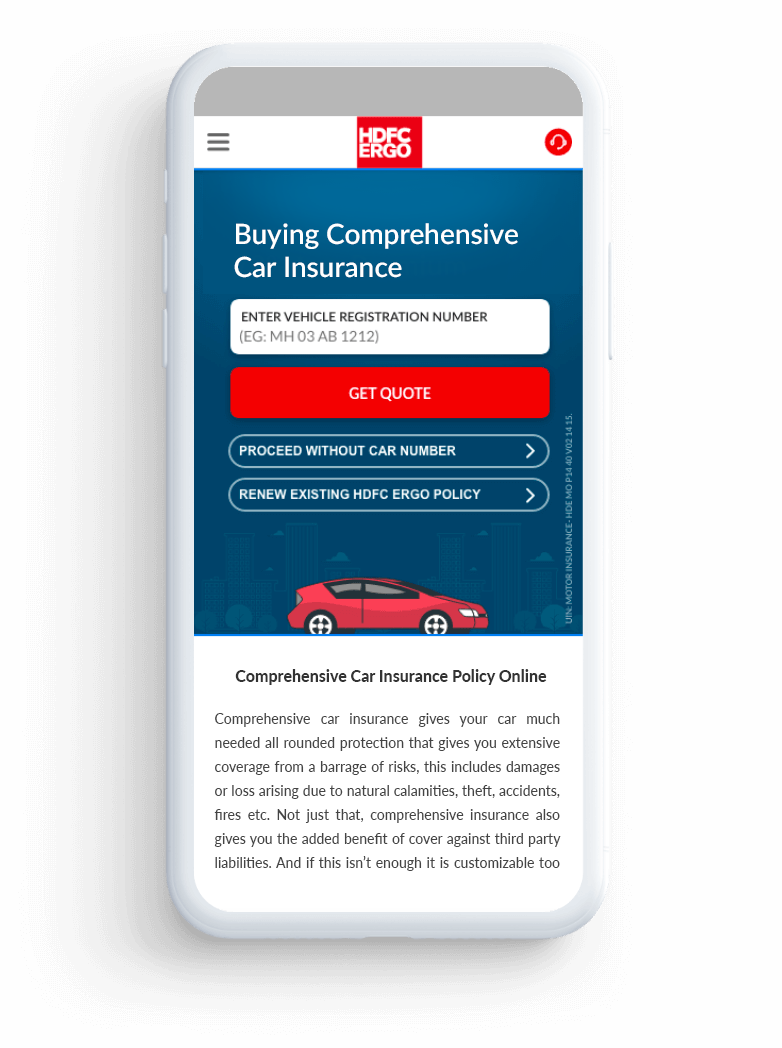
Step 1 to calculate car insurance premium

Visit the Website

Visit the HDFC Ergo website. Enter the registration number
of your vehicle and click on ‘Get Quote’.
You can also check quote by entering the
make and model and the year of manufacturing.

Step 2 - Select policy cover- calculate car insurance premium

Choose the Comprehensive Plan Option

If you proceed by entering the registration number,
you can proceed by choosing the comprehensive plan

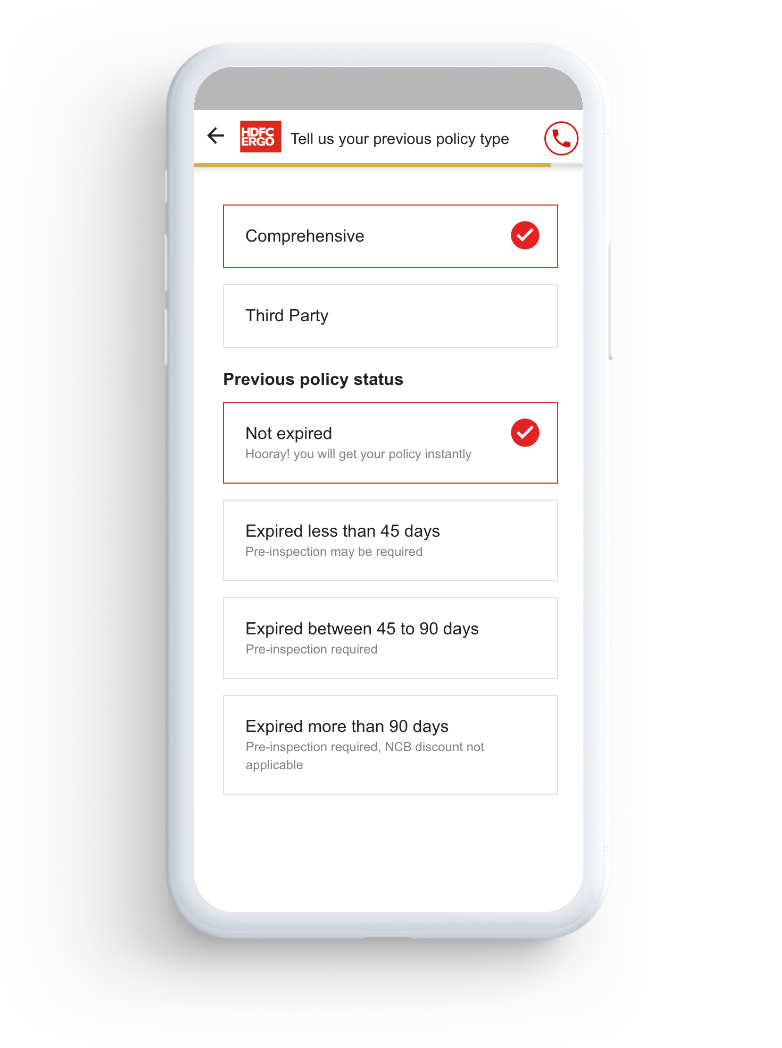
Step 3- Previous car insurance policy details

Enter Details

Provide your previous policy details, such as
NCB status, previous policy type,
and expiry date.

Step 4- Get you car insurace premium

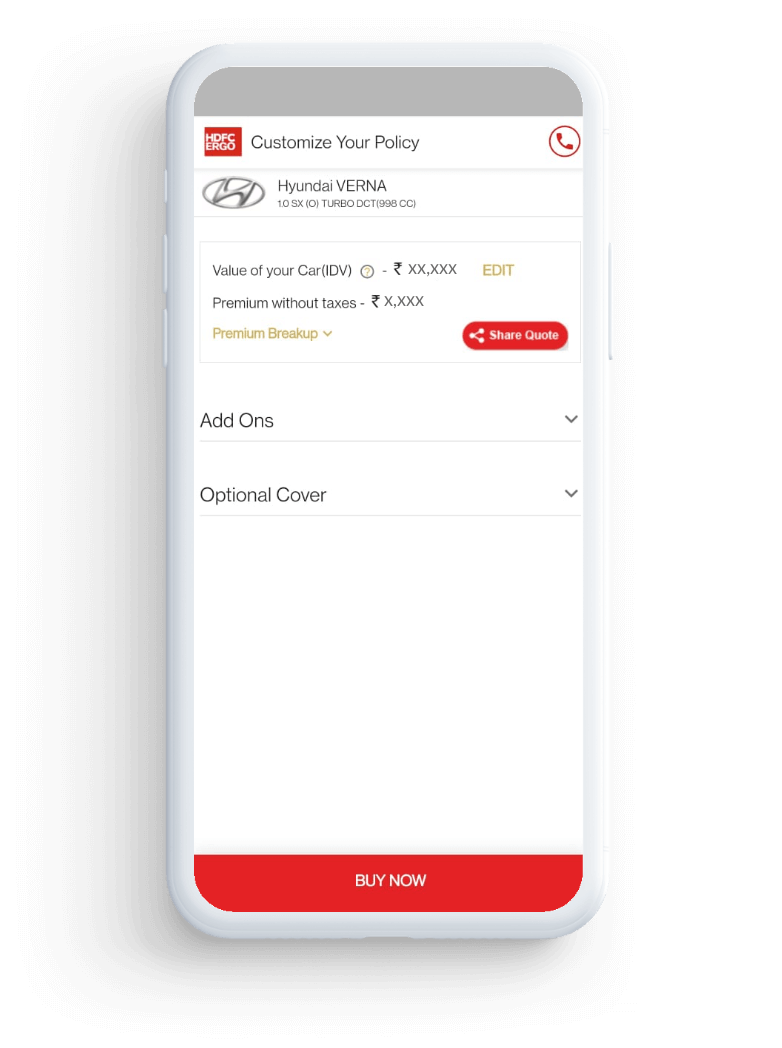
Customise the Policy & Pay the Premium

Opt for any optional add-ons that
you wish to add to your base policy.
The final premium will be displayed. You can
pay the premium online, and the policy will be issued instantly.

What to Keep in Mind While Raising a Comprehensive Car Insurance Claim?

Making a comprehensive insurance claim is relatively easy when you follow the correct process. To ensure smooth and timely claim settlement, here are some important points you should consider while raising a claim:

1

Report The Claim Immediately

Always report the claim immediately after the incident. Keep the claim reference number handy, which is essential for all future claim-related communications.
2

File An FIR For Theft or Third-Party Claims

If you are filing a claim for third-party injuries/damages or theft, a police First Information Report (FIR) is mandatory.
3

Avoid Claims for Policy Exclusions

The policy does not cover certain situations. Ensure you don't raise claims for policy exclusions to avoid rejections.
4

Pay And Reimburse at Non-Cashless Garages

If your car is not repaired at a cashless garage, you will need to pay the repair costs upfront. You can then apply for reimbursement by submitting the required claim documents.
5

Deductibles Are Borne by the Policyholder

The deductible amount will need to be borne by you for every claim you make.
6

Use the Insurer’s Helpline or Mobile App

Many insurers offer 24x7 helplines and app-based claim filing. Using these helps speed up the claim registration and reduces paperwork errors.
7

Don’t Start Repairs Without Approval

Unless it’s an emergency, avoid starting repairs before the surveyor’s inspection and approval, as it may lead to partial or delayed claim settlements.
8

Keep All Bills and Documents Safely

Store repair invoices, payment receipts, FIR (if filed), photos, and claim forms safely. These are necessary for reimbursement-based claims.
9

Click Photos/Videos of the Damage

Capturing clear photos/videos of the incident location, vehicle damage, and any third-party involvement helps support your claim case.

Why Buy Comprehensive Insurance Online?

Here are the key reasons why buying comprehensive insurance online is a smart choice.

1

Ease and Convenience

Experience true convenience by giving your car complete protection from the confines of your home, all within 3 minutes!
2

Informed and Transparent Choice

Researching and knowing what comprehensive car insurance is and what your policy entails can help you stay abreast of what’s in store, rather than being caught unaware.
3

More Cost Effective

It helps you save your hard-earned money while you explore different combinations of add-ons and other parameters that decide your premium amount.
4

Compare Before You Buy

You don’t have to settle for the first option. With online buying, you can compare plans, coverage, claim support, and customer reviews side-by-side.
5

Zero Paperwork

No forms, no photocopies, no courier hassles. Everything, from proposals to payments, happens digitally. This reduces errors, saves time, and is also great for the environment.

How to Claim Comprehensive Car Insurance?

Filing a claim just got easier with our 4-step process and a claims settlement record that will ease your worries!

  • Step 1-  Register for car insurance claim
    1

    Upload Documents

    Call our helpline number or send a message on WhatsApp at 8169500500. Our agent will send you a link. You can upload documents online using that link.
  • Step 2-  digital inspection or self inspection by surveyor
    2

    Self Survey/ Digital Surveyor

    You can opt for self-inspection or an app-enabled digital inspection by a surveyor or workshop partner.
  • Step 3 - Track insurance claim status
    3

    Claim Tracker

    You can track your claim status through the claim tracker.
  • Comprehensive Car Insurance Claim
    4

    Claim Approved

    Once your claim is approved, you will receive the notification via the message, and the claim will be settled through a network garage.

What Are the Documents required for Filing a Comprehensive Car Insurance Claim?


• This is the primary document that officially initiates your claim.

• It captures details such as policy number, vehicle information, date and cause of loss, and claim amount.

• Ensure all details match your policy records to avoid discrepancies.

• A copy of your active comprehensive car insurance policy is required to verify coverage.

• It helps to confirm policy validity, coverage scope, and add-ons, if any.

• The RC confirms ownership and vehicle details.

• A self-attested copy is usually sufficient, though the original may be required for verification.

• A copy of the driving license of the person driving the car at the time of the accident is mandatory.

• The license must be valid and appropriate for the type of vehicle being driven.

• Required in cases of theft, major accidents, third-party injury, death, or significant property damage.

• A General Diary (GD) entry or police intimation may be accepted, depending on the situation.

• Clear photos showing the extent of damage from multiple angles help speed up assessment.

• These are especially important for cashless and digital claims.

• A repair estimate from the garage is required before claim approval.

• After repairs, the final invoice and payment receipt may be needed for reimbursement claims.

• A surveyor is appointed to assess the damage and estimate the claim amount.

• Cooperation during inspection helps avoid claim delays.

• Required for identity verification and compliance purposes, especially for higher claim amounts.

• In some cases, address proof may also be requested.

• Needed to process claim payment directly into your bank account for reimbursement claims.

• Ensure the account details match the policyholder’s name.

• Theft claims may require a non-traceable certificate from the police.

• Claims involving third-party damage may need court documents or legal notices.

• Natural disaster claims may require location or weather-related confirmation.

What is NCB in Comprehensive Car Insurance?

NCB stands for No Claim Bonus. You earn this bonus in a comprehensive car insurance policy if you don't claim during a policy year. With NCB, the insured person gets a discount on the comprehensive car insurance premium at the time of renewal in the following policy year. The rate of the NCB also increases after each successive claim-free year.

In the first year, the policyholder gains a 20% NCB discount if they haven’t made any claims during the policy year. Consequently, the policyholder continues to gain an additional 5% to 10% NCB with each consecutive claim-free year. However, once you make a claim, the accumulated NCB becomes zero. After that, you start earning NCB again from the next policy year, provided they are claim-free.

To learn more about NCB in car insurance, such as its benefits, how it is calculated, how it can be terminated, etc., check NCB in car insurance.

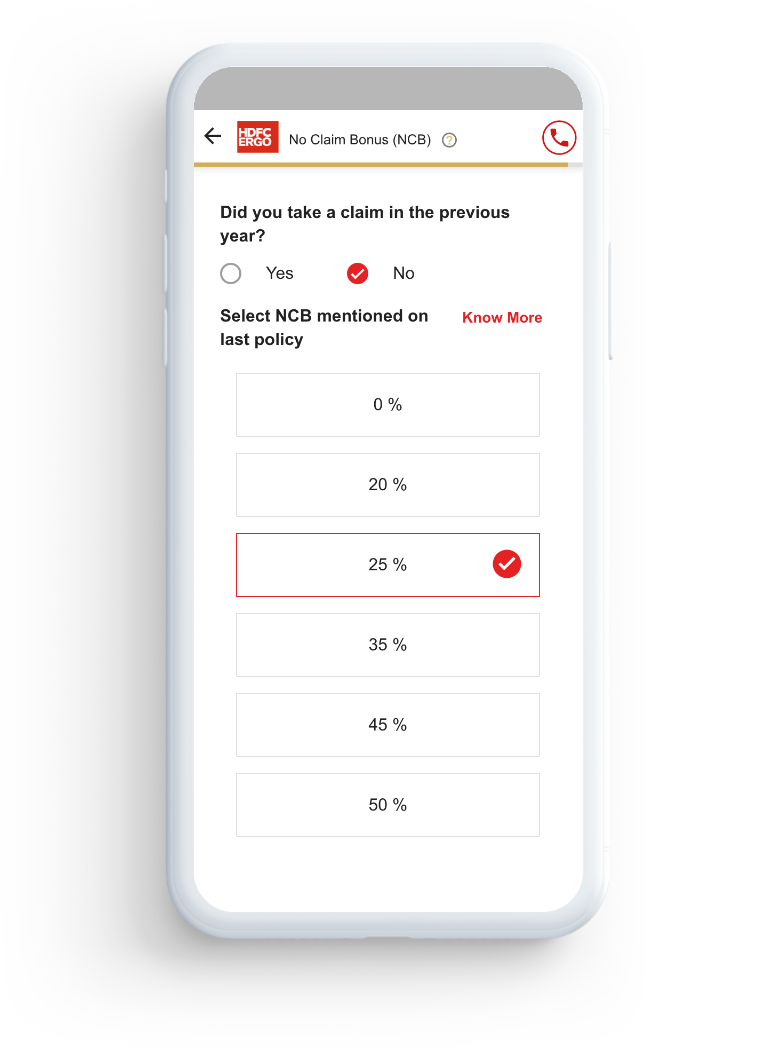
The NCB allows you to get a premium discount at the time of renewal. The rate of the NCB is as follows:

Number of claim -free years Allowed NCB
After the first claim -free year 20%
After two successive claim -free years 25%
After three successive claim -free years 35%
After four successive claim -free years 45%
After five successive claim -free years 50%

Also Read: How to Get NCB Certificate?

What is IDV in Comprehensive Car Insurance Policy?

Insured Declared Value (IDV) in comprehensive car insurance is the maximum amount the policyholder will receive if the vehicle is damaged beyond repair or stolen.

IDV represents the approximate market value of the car and it changes every year due to depreciation.

IDV = (The price of the car as determined by the manufacturer - Depreciation based on the car's age) + (Cost of accessories added to the car - Depreciation based on the age of such accessories).

A Simple Example

Let’s say you bought a car and its IDV is ₹10 lakh in the first year. If the car gets stolen during that year, the insurer will pay ₹10 lakh (subject to policy terms).

As years pass, the IDV will drop due to depreciation. For example:

• Year 1 IDV: ₹10,00,000

• Year 2 IDV: ₹9,00,000 (example)

So, a total-loss claim in Year 2 would settle around ₹9 lakh.

You can read more about IDV, such as its importance, the factors affecting it, and how it influences car insurance premiums, check IDV in car insurance.

The rate of depreciation has been pre-determined. It is as follows:

Age of the car Depreciation rate
Up to 6 months 5%
More than six months but less than a year 15%
More than a year but less than two years 20%
More than two years but less than three years 30%
More than three years but less than four years 40%
More than four years but less than five years 50%
9000+ cashless Garagesˇ Across India

Comprehensive Car Insurance Reviews & Ratings

4.4 Stars

car insurance reviews & ratings

Our customers have rated us

View all 1,58,678 Reviews
Quote icon
HDFC ERGO system is in place and staffs are well trained. They know exactly what is required by the client. I was able to resolve my requirement in 2-3 minutes. Well done.
Quote icon
HDFC ERGO's chat team member helped me to know whether ekyc was linked to my policy or not. The customer care executive also guided me how to link it. I appreciate the quick response and helpful nature of your executive.
Quote icon
I appreciate the quick response of your customer care team. Thank you.
Quote icon
I must say that customer service experience at your Guindy office was amazing.
Quote icon
Excellent service by your customer care team.
Quote icon
I think that the HDFC ERGO system works efficiently and they have hired well-trained staff to handle client queries. My problem was resolved in just 2-3 minutes.
Quote icon
Your customer care executive helped me easily identify whether ekyc was linked to my policy. I appreciate the helpful nature of that person.
Quote icon
I had a good experience with the customer service officer at your Guindy branch in Chennai.
Quote icon
Thank you HDFC ERGO customer care team for your quick response.
Quote icon
The process at HDFC ERGO is simple and I always receive quick responses to my mail every time from your team.
Quote icon
My claim request went well in the end. Initially I found difficult raising the claim, however, in the end everything was resolved.
Quote icon
Customer care services provided by HDFC ERGO is remarkable.
Quote icon
The customer care executive person was very humble and soft-spoken. Your team members have perfect telephone etiquette with remarkable voice modulation.
Quote icon
My experience with HDFC ERGO is excellent.
Quote icon
HDFC ERGO team provides good support to the customer.
Quote icon
I must say that HDFC ERGO provides the best services to their customers.
Quote icon
HDFC ERGO provides the best customer car service. I like their behaviour of responding promptly and instantly starting the work on that query.
Quote icon
The customer care executive who attended to my call was extremely courteous, and called me thrice to resolve the issue. Full marks to the customer care team for superb customer care attitude.
Quote icon
Your sales manager was very helpful and proactive in getting the policy renewed.
Quote icon
HDFC ERGO provides doorstep services and are very excellent at their work. Whenever I have approached your team, they have provided quick solution to my query.
Quote icon
I have chosen HDFC ERGO first time for my four-wheeler and I am glad to say that they provide really good services. The self inspection option is really good for saving valuable time of the customer. I thanks HDFC ERGO team for always providing good customer experience.
Quote icon
We can access HDFC ERGO car insurance policy details at anytime easily. Your customer care representatives are very friendly.
Quote icon
HDFC ERGO customer care team believes in providing quality service.
Quote icon
HDFC ERGO provides hassle-free services. Pleased with the quick action and process for attending the customer query.
Quote icon
HDFC ERGO has good staff in their customer care team. I hope they continue providing the best services to their policyholders.
Right
Left

Read the Latest Comprehensive Car Insurance Blogs

Growing Interest in 3-Year Comprehensive Car Insurance to Avoid Annual Renewals

Growing Interest in 3-Year Comprehensive Car Insurance to Avoid Annual Renewals

See full article
Published on January 6, 2026
Comprehensive Car Insurance Explained: Coverage, Exclusions, and Benefits

Comprehensive Car Insurance Explained: Coverage, Exclusions, and Benefits

See full article
Published on Jun 12, 2025
Comprehensive Insurance for New vs Old Vehicles

Comprehensive Insurance for New vs Old Vehicles

See full article
Published on November 25, 2024
Your guide to buying insurance for the Kia Syros SUV in India

Your guide to buying insurance for the Kia Syros SUV in India


See full article
Published on June 12, 2025
Role of Comprehensive Car Insurance in Protecting Your Investment

Role of Comprehensive Car Insurance in Protecting Your Investment

See full article
Published on March 10, 2025
Scroll Right
Scroll Left
VIEW MORE BLOGS

Frequently Asked Questions on Comprehensive Car Insurance


Car modifications can increase your premium because they may increase the risk of theft or damage. In some cases, safety modifications like ABS or sensors may help reduce premium.

You must inform the insurer about modifications, otherwise, claims can get rejected.

When you sell your car, you must transfer the active insurance to the new owner within 14 days. [8] If you buy a used car, make sure the insurance is also transferred to your name.

No, comprehensive insurance is not legally mandatory. Only third-party insurance is compulsory as per law in India.

However, comprehensive gives better protection by covering your own car too.

You can renew your comprehensive car insurance policy anytime online, with insurance providers like HDFC Ergo.

Just go to the HDFC Ergo website, fill in your details, and renew your comprehensive car insurance policy online in minutes.

You will need an FIR report, vehicle’s registration certificate, driving license, a car insurance copy, and the claim form, to raise a comprehensive car insurance claim.

FIR is needed in cases like theft, injury, or major damage. Sometimes, extra documents are asked depending on the situation.

A comprehensive car insurance policy is advisable for new car owners, people who go on frequent road trips, city drivers, and more. Anyone wanting peace of mind and wider coverage should consider it.

The validity of comprehensive car insurance is usually one year. However, if you opt for a long-term policy, coverage will extend based on the number of years you opt for while purchasing the policy.

Yes, NCB (No Claim Bonus) can be transferred to a new insurer. It remains valid as long as you renew on time without a break. NCB reduces premiums and can go up for claim-free years.

Third-party covers damage to others but not your own car. In India, having basic third-party insurance is a legal requirement as per the Motor Vehicles Act of 1988.

Comprehensive covers both third-party and own damage due to accidents, theft, etc. This makes comprehensive coverage more helpful in real-life situations.

Yes, you can shift your car insurance plan from a third-party liability plan to a comprehensive car insurance policy. Comprehensive is better because it protects your own car too.

Third-party only meets legal requirements and offers no own damage cover.

Note: If you already have a third-party liability policy, you can also get a separate own damage policy.

You can reduce car insurance premium value by:

• Installing anti-theft devices

• Increasing deductibles,

• Having a clean driving record, and

• Accumulating NCB benefits by driving safely and avoiding unnecessary claims.

Here’s the process:

• Visit our car insurance page

• Enter your vehicle’s registration number and previous policy details

• Choose a plan from comprehensive, third party, or own damage cover.

• Select or remove add-ons.

• Click on the submit button to view the premium.

Yes, it covers damages from floods, earthquakes, storms, etc. You must report the incident quickly and share relevant evidence.

The typical validity is one year from the date of purchase. Insurers also offer multi-year options, which you can opt for, to avoid yearly renewal.

In India, comprehensive car insurance can be categorised as per the policy period. You can opt for an annual comprehensive car insurance policy or a long-term plan with a tenure of three or five years. New cars may get bundled plans with long-term third-party + yearly OD.

No. Comprehensive car insurance is a type of car insurance policy. However, bumper-to-bumper, also called zero depreciation cover, is an add-on that removes depreciation deductions.

In some cases, you may be able to buy comprehensive car insurance in India for your 15-year-old car. However, you must check whether such plans are offered for older vehicles. Coverage and premiums may vary across providers.

Comprehensive car insurance costs more than a third-party or a standalone own damage policy due to its exhaustive coverage. Premium can vary depending on the IDV, model, city, and chosen add-ons.

No, normal wear and tear or mechanical damage is not covered. Engine Protect add-on is needed for water damage or oil leakage issues.

Yes. You can easily convert your car’s coverage from third-party to comprehensive during renewal. You just need to choose own-damage cover + any add-ons you want.

When buying comprehensive car insurance, you should compare plans online to find the most suitable option. Plans can be compared based on inclusions, exclusions, claim settlement ratio, availability of cashless garages, and customer support.

Yes. Comprehensive car insurance covers accidental scratches as per policy provisions.

First-party car insurance refers to a standalone own damage policy. It covers damages or losses to the insured car due to accidents, fire, theft, floods, and similar risks.

Comprehensive car insurance covers third-party liabilities as well as damage to the insured vehicle.

Comprehensive car insurance covers major parts damaged due to accidents, theft, and natural events. Consumables like oil or nuts are excluded unless you add a consumables cover.

Add-ons can help fill such gaps based on your needs.

First, you raise a claim and submit required documents. A surveyor inspects the damage and approves repairs. Payments can be done either cashless at network garages or via reimbursement.

Yes, as long as you have active third-party insurance. Third-party is compulsory under traffic laws in India. However, investing in comprehensive car insurance is highly recommended as it comes with own damage cover and the mandatory third-party cover.

It’s a type of car insurance plan that covers both third-party liabilities and damages to your own vehicle from accidents, theft, fire, natural disasters, and other covered incidents.

Zero depreciation is not a policy but an add-on. On the other hand, comprehensive car insurance is a type of policy that offers protection against third-party liabilities and own damage.

The cost varies by car model, location, and add-ons. However, it’s generally higher than basic third-party liability insurance plans due to wider coverage.

Yes. If you want peace of mind, full coverage, and protection against most kinds of losses, it’s worth the slightly higher premium rate.

Did you know
You can use a plunger to fix minor dents on your car. However, the car insurance full coverage under the comprehensive plan is still the best option to tackle accidental damages/losses suffered by your car.

Reference Links


Citations


Awards & Recognition

Slider Right
Slider Left

Last updated: 2023-02-20

View all awards